

Mount Sinai Health Systems: Amplifying Employee Voice Through Strategic Digital Communication
Mount Sinai Health Systems is one of the largest integrated healthcare delivery systems in the United States, with 8 hospitals, 400 ambulatory locations across New York and Florida, and 50,000 employees. The organization includes nursing staff, physicians, administrative professionals, and support personnel working across a complex multi-site healthcare environment.
Mount Sinai sought to transform how it engaged its dispersed workforce—particularly deskless employees—through a unified digital communications platform that could serve as a single source of truth while amplifying employee voice during periods of organizational change.
Business Challenges
Significant employee communications challenges were faced by the organization, including:
- COVID-19 which amplified the need to reach deskless clinical staff with timely, consistent organizational communications.
- Lack of a communications channel that prioritized frontline staff. The communications ecosystem was uneven. Some employees were overwhelmed by multiple communications, others like frontline staff relied much more heavily on face-to-face communication from huddles and physically visiting hospital daily management boards (DMBs) for essential communication.
- Limited two-way dialogue between leadership and frontline employees created distance between executives and the workforce experiencing day-to-day operational realities with patients. Longform content was the historic norm practiced by senior leaders. Digital communication was an afterthought given the patient-centric focus.
The need for a unified employee communications platform was clear, but gaining organizational traction and adoption took time.
Outreach to develop the champion and content creator network began with education in best content practices and finding use cases and content that mattered most. Mount Sinai leadership recognized that the new platform could become the organization’s communications backbone—if adoption and engaging the employee voice could be systematically cultivated.
Employee Voice Strategy
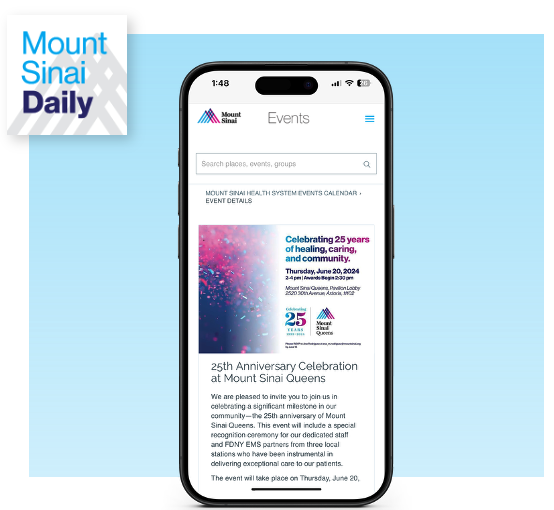
Mount Sinai Health Systems implemented a branded mobile and desktop application called Mount Sinai Daily to deliver short-form communications from chief nursing officers, executives, and organizational leaders directly to employees’ personal devices. The strategic approach centered on making the platform indispensable. It:
- Met deskless employees where they were. Recognizing that clinical staff couldn’t access desktop computers during shifts, the mobile-first approach put organizational news in employees’ pockets.
- Established the Daily as the single source of truth. All trainings, events, and organizational announcements were promoted through the platform, reducing email overload and eliminating redundant broadcast communications.
- Created an open channel for reinforcing organizational commitments and transparency. The platform became a visible demonstration of Mount Sinai’s position on critical issues, including the resolution of the 2023 nursing strike.
- Built a continuum of engagement. Rather than expecting immediate high engagement, the strategy recognized that the employee voice follows a commitment curve progression—from downloading the app, to lurking and viewing content, to liking and clicking through, and eventually to commenting and sharing.
The goal was not just information distribution, but genuine employee voice activation through a platform that demonstrated leadership was listening and responding.
Tactics
Gamification and Extrinsic Rewards
The journey to adoption began with intermittent gamification designed to create initial engagement and habit formation. Contests and incentives included National Smile Day participation, NYC Marathon tickets (and posts cheering on fellow Mount Sinai colleagues), contests, cultural and sports ticket incentives. While labor-intensive, these carefully timed rewards created initial “stick factor” and introduced employees to the platform’s value. The approach shifted from extrinsic rewards to intrinsic motivation as employees discovered organic reasons to continue making the app part of their ongoing experience.
Group-Based Recognition
Mount Sinai’s “Appreciating You” content series recognized entire job role groups and departments during designated awareness weeks. Posts celebrated EMS Week, Nursing week, and other employee groups to celebrate cultural and historic moments of unity. These focal points complemented in-person recognition events. The content generated significant engagement: one EMS week post garnered 124 comments as employees voiced peer recognition and appreciation. The digital engagement reinforced what was happening in-person and created longer-duration as well as a permanent record of organizational gratitude.
Leadership Influence and Modeling
Mount Sinai recognized that employee voice flourishes when leaders actively participate in the conversation. Chief Nursing Executives and the Hospital President at Morningside began the test of the platform by modeling behavior, delivering and embodying authentic and sometimes heartfelt news. The behavior inspired peers at the other hospitals to also establish channels for their hospitals. Skeptics became proponents as they experienced the platform’s impact on organizational communication.
CEO Presence
Brendan Carr, Mount Sinai’s CEO, established a signature content series called “CarrTalk” that became one of the most-liked content types on the platform. While comments weren’t yet open on all CEO posts, Carr used multiple mediums to connect with employees—including rounding (physically being present in hospitals), videos, and written messages. His content ranged from serious organizational updates to lighter, personal messages which acted to humanize his presence. CarrTalk posts demonstrated that the highest levels of leadership were present, paying attention, and invested in employee connection.
Quantitative and Qualitative Results
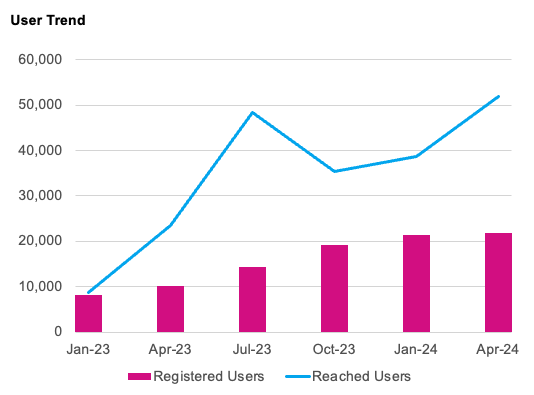
Mount Sinai Daily achieved significant adoption and sustained engagement across the health system’s workforce:
Feb. 2023: 7,000 users. 30 trained content contributors and significant wins
June 2024: 22,000 registered employees actively using the platform, representing 44% penetration across the organization.
11.3 stories viewed per month by each employee on average, demonstrating consistent content consumption and return visits.
Organizational behavior shifted from questioning the platform, hesitation to post and share information on it due to low adoption, to embrace of Daily as the single source of truth for internal communications.
Reduced broadcast communications as employees and departments self-promoted trainings and events directly through the platform, decreasing email volume and communication fatigue.
Visible employee voice activation through likes, comments, and engagement on recognition posts, leadership messages, and organizational updates.
The platform successfully reached the organization’s most challenging audience—deskless clinical staff—during a period of significant organizational stress and change. By thoughtfully designing an engagement continuum that honored where employees were and met them with respect, recognition, and responsive leadership, Mount Sinai Health System created a sustainable digital ecosystem where employee voice could flourish alongside organizational communication needs.